
Ethereum burn rate is often treated as a direct driver of price, but markets rarely respond to supply changes in isolation. What actually matters is whether reduced supply collides with active demand at the right moment. Without that collision, burn becomes a background adjustment rather than a price catalyst. The assumption that less supply equals higher price simplifies a system that is driven by timing, positioning, and participation.
The introduction of EIP-1559 changed how Ethereum handles transaction fees, permanently removing a portion of ETH from circulation through burning. This mechanism is frequently framed as bullish because it reduces net supply over time. But supply reduction alters conditions, not behavior. And price is always a function of behavior.
Recent sessions have shown Ethereum holding relatively stable ranges even as burn activity remains elevated. That stability is not a contradiction. It is a signal that structural improvement is not yet meeting active demand.
Understanding that difference is what separates narrative from structure.
What the Ethereum Burn Rate Actually Does
At its core, Ethereum’s burn mechanism removes a portion of transaction fees from circulation. The more network activity there is, the higher the base fees, and the more ETH gets burned. During periods of high usage, this can offset or even exceed new issuance, creating deflationary conditions.
But burn is not demand. It does not introduce new buyers into the market, nor does it force capital to act. It simply reduces the amount of ETH that could potentially be sold in the future. This reduction becomes more meaningful when combined with Ethereum’s broader supply constraints through staking, where locked ETH further limits what is actually available to the market.
That distinction is often overlooked.
Burning ETH removes potential sell pressure, but it does not create buying pressure. More importantly, it does not change the urgency of participants. And urgency is what moves markets.
Supply changes shape the battlefield. They do not decide when the battle starts.
Why Reduced Supply Doesn’t Automatically Move Price
The assumption that lower supply leads to higher price comes from static models of supply and demand. But markets operate dynamically, through execution and competition.
Price moves when aggressive buyers lift offers across the order book. That requires intent, capital, and a reason to act now rather than later. A reduction in supply happening passively does not create that urgency.
In practice, the market does not reprice an asset simply because less of it exists in theory. It reprices when participants compete for liquidity in real time.
Price does not move because supply is lower. It moves because demand is forced to compete for what remains.
Over the past week, price behavior has reflected this clearly. Even as structural supply continues to tighten through burn, order books have remained balanced enough to absorb flows without forcing expansion. That tells you demand is present, but not urgent.
Markets do not move when conditions improve. They move when conditions become impossible to ignore.
Demand Is the Missing Variable
To understand when burn matters, you have to examine demand as an active force, not a passive concept.
Demand in crypto markets is not constant. It emerges under specific conditions:
- When capital rotates into Ethereum from other assets
- When institutional flows or large players begin accumulation
- When on-chain activity translates into speculative positioning
- When narratives create urgency rather than interest
What matters is not whether demand exists, but whether it is forced to act.
Current market conditions suggest a phase where participants are aware of improving supply dynamics but are not yet compelled to reposition. This often leads to quiet accumulation, where larger players build exposure without disrupting price.
Markets do not move when participants agree. They move when participants are forced to disagree under pressure.
Without that pressure, supply reduction remains dormant.
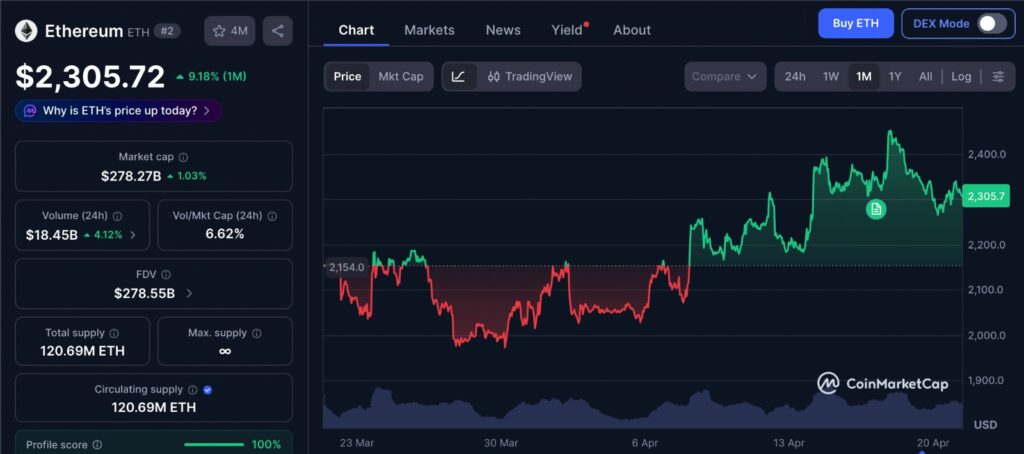
Ethereum’s recent price behavior reflects a period of controlled balance. Price is not stalling due to weakness, but because available liquidity is still sufficient to absorb demand. Burn is tightening supply gradually, but not fast enough to overwhelm that liquidity.
Where Burn Actually Starts to Matter
Burn becomes meaningful when it interacts with conditions that amplify its effect.
Those conditions typically include:
- Thin liquidity on the sell side
- Increasing demand or sudden capital inflows
- Positioning that is underexposed or vulnerable
In these environments, reduced supply begins to change how price responds to demand. As seen in liquidity depth conditions across crypto markets, price only accelerates when available liquidity is too thin to absorb incoming demand. Not because it initiates the move, but because it removes friction.
From an institutional perspective, this is where behavior shifts. Market makers operate by managing inventory and minimizing risk. When supply is abundant, they can absorb buying pressure and maintain tight price ranges. But as supply tightens, their ability to absorb flow without repricing weakens.
This creates a structural shift. Instead of absorbing demand, they begin to move price to manage exposure.
Price does not rise because buyers are strong. It rises because sellers can no longer maintain control.
When demand meets constrained supply under these conditions, price moves faster and more efficiently. What appears as a sudden breakout is often just the removal of resistance that had been quietly weakening.
The Real Role of Burn in Market Structure
Ethereum’s burn mechanism is best understood as an amplifier within market structure.
It reshapes the long-term supply profile of the asset, which can strengthen directional moves when demand aligns. But it does not dictate when those moves occur. Timing is always controlled by liquidity, positioning, and participant behavior.
Burn operates in the background, gradually tightening conditions. When demand eventually increases, price does not need to overcome the same level of resistance.
This is why burn is often misunderstood. It is treated as a signal, when in reality it is a modifier.
Markets do not respond to isolated variables. They respond to the interaction between variables. And in that interaction, supply only matters when it meets demand under pressure.
Conclusion
Ethereum’s burn rate changes the structure of supply, but structure alone does not move markets. What drives price is the moment when that structural change intersects with active demand and constrained liquidity. Until that intersection occurs, burn remains a silent force, shaping conditions without triggering movement. The real signal is not that supply is decreasing, but that the market is approaching a point where that decrease begins to matter.
Suggested Links
Keep yourself updated with the latest news around Altcoins with Blockbuzzed
Keep yourself updated with the latest news around Ethereum with Blockbuzzed

