[ad_1]

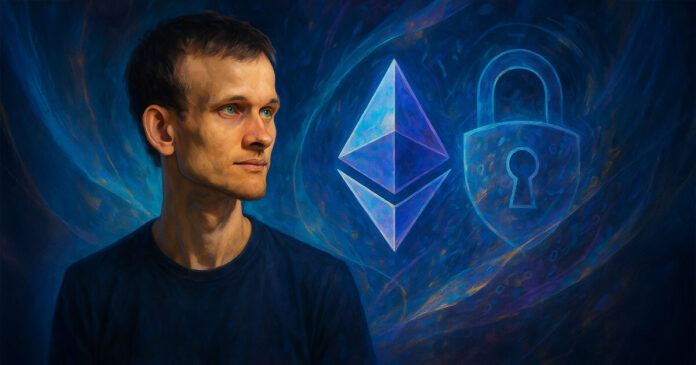
Ethereum co-founder Vitalik Buterin believes that one-per-person digital ID programs, despite utilizing zero-knowledge proofs (ZK proofs), carry dangers to privacy. ZK proof wrapped IDs supplied by World ID (previously Worldcoin) utilizing biometric knowledge and ZK proofs have been gaining traction, not too long ago crossing 10 million customers.
Therefore, in his weblog on Saturday, Buterin steered ‘pluralistic identity’ as the “best realistic solution” to totally preserve privacy.
ZK proof wrapped IDs use ZK proofs to set up that a person has a legitimate ID with out revealing any particulars of their ID, thus promising privacy. However, Buterin argued that ZK proof wrapped digital IDs still have loopholes that could compromise privacy.
ZK wrapped IDs clear up ‘a lot of important problems’
Buterin concedes that “ZK-wrapping solves a lot of important problems.” Apart from ZKIDs, all choices to authenticate a person’s identification on any software require the person to reveal their whole authorized ID. According to Buterin:
“This is a gross violation of the common computer-security principle of least privilege: a process should only get the least authority and information required to accomplish its task.”
For occasion, if an app requires a person to show their age, the software should not be in a position to entry any other knowledge in the authorized ID. Therefore, ZKIDs present a essential and beforehand unavailable avenue to preserving privacy, Buterin stated.
Risks related with ZK proof wrapped IDs
The designs of present ZK-identity platforms come with constraints—they permit customers to create only one ID for each software. Firstly, the one-per-person ID restrict means that ZK IDs do not assure pseudonymity, Buterin stated. He defined:
“In the real world, pseudonymity generally requires having multiple accounts: one for your “regular identity” and others for any pseudonymous identities.”
Teenagers and many others already apply having a number of accounts, calling them pretend and actual Instagram accounts. Buterin wrote:
“…under one-per-person ID, even if ZK-wrapped, we risk coming closer to a world where all of your activity must de facto be under a single public identity.”
The single ID constraint for each software means that the “practical level of pseudonimity” supplied by ZK wrapped IDs is decrease. This is because, presently, providers like Google accounts permit customers to create up to 5 accounts.
Secondly, customers can be coerced by governments or firms to reveal their identities on one or more purposes, thus nullifying privacy preservation. For occasion, an employer can ask a potential recruit to reveal their full ID on one or more social media platforms as a situation of employment.
Therefore, Buterin stated that ZK does not “eliminate the possibility” that a particular person’s identification could be revealed under coercion.
Lastly, ZK proof wrapped IDs also come with non-privacy dangers like errors.
In extraordinary or edge instances, all types of IDs usually fall brief. For occasion, biometric IDs may not work for customers whose options have been broken or warped by damage. Biometric IDs could also be doubtlessly spoofed by replicas. Additionally, authorities IDs do not embrace stateless individuals or these who have yet to purchase such paperwork. Therefore, Buterin wrote:
“These edge cases are most harmful in the case of systems that try to maintain a one-per-person property, and they have nothing to do with privacy; hence, ZK does not help.”
Pluralistic identities are the resolution, Buterin stated
Buterin outlined pluralistic identification as “an identity regime where this is no single dominant issuing authority, whether that’s a person, or an institution, or a platform.” According to Buterin, pluralistic IDs can be specific or implicit.
In specific pluralistic identification or ‘social-graph-based identity,’ a person has to show a certain characteristic, like their age, or that they’re human, through attestations from others in the group, who are also each verified through the same course of. Explicit pluralistic ID programs can permit customers to have one or more pseudonyms, with each pseudonym having its own on-line presence and historical past, Buterin claimed.
On the other hand, in an implicit pluralistic identification system, a person can present any ID—authorities IDs or social media IDs—for verification. According to Buterin, implicit pluralistic identification programs scale back the risk of a person being coerced to reveal their whole identification.
Furthermore, pluralistic ID programs are “naturally more error tolerant,” permitting individuals who are typically excluded, like these with out the proper paperwork, to show their identities.
Buterin warned, however, that these advantages disappear and the system successfully turns into a one-per-person ID system when “any one form of ID gets close to 100% market share, and it becomes realistic to demand it as a sole login option.”
The publish Vitalik Buterin says pluralistic ZK digital IDs are the ‘finest realistic resolution’ to preserve privacy appeared first on CryptoSlate.
[ad_2]

