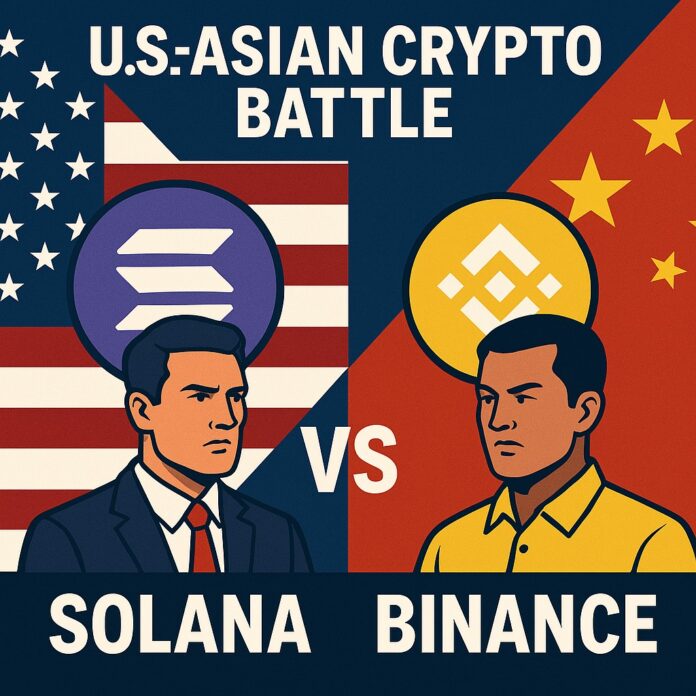
U.S.-Asian Crypto Battle is shaping the future of the digital asset industry as Solana and Binance Coin (BNB) push for dominance with strikingly different sources of support. While Solana benefits from U.S. institutional capital and strong investor confidence, Binance thrives on Asian backing and grassroots ecosystem growth. This tug of war between institutional funds and community capital has made the contest between the two blockchains one of the most intriguing in the market.
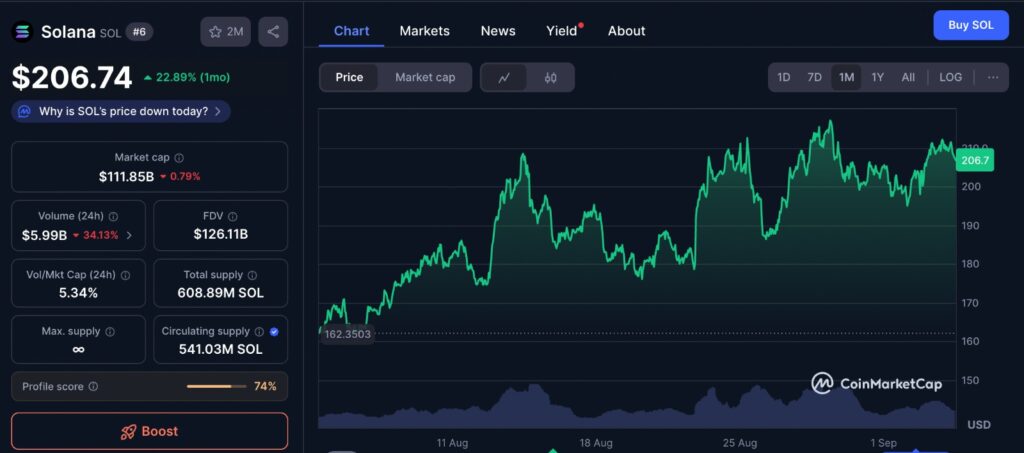
Over the past month, Solana’s price chart shows a steady upward trajectory with multiple higher lows, reinforcing investor confidence. The consistent gains highlight how U.S. institutional inflows are cushioning Solana against broader market volatility. If this trend continues, Solana could build enough momentum to challenge BNB’s position in the top-five rankings. The month-long chart also reflects renewed optimism tied to the upcoming Alpenglow upgrade, which has been a key narrative for its sustained rise.
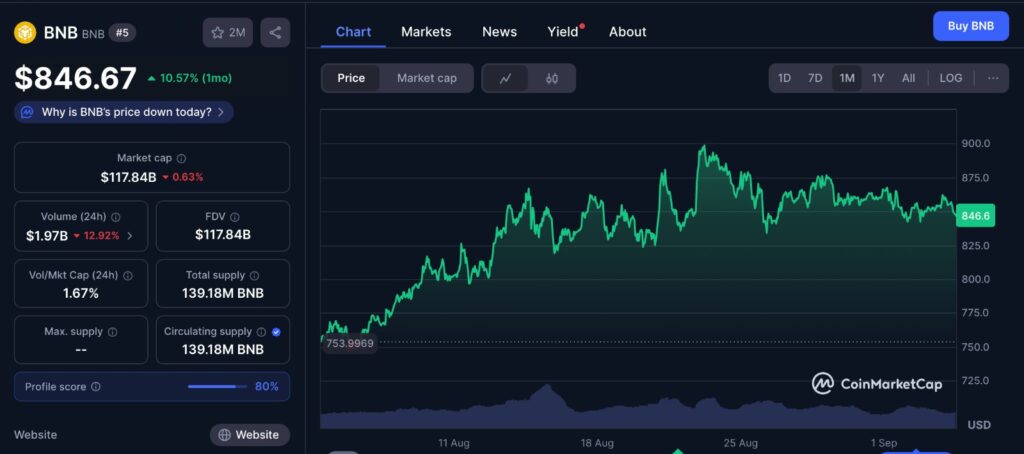
In contrast, Binance Coin’s one-month chart presents a more restrained performance. While BNB has shown resilience with fewer sharp declines, its growth appears slower compared to Solana’s surge. This reflects the community-driven and ecosystem-anchored nature of BNB’s support base, which emphasizes stability over rapid gains. The chart underlines how Binance Coin continues to track more closely with Bitcoin’s overall market movements, highlighting its enduring role as an exchange-driven token rather than a speculative play.
U.S.-Asian Crypto Battle: Contrasting Capital Flows
Solana’s reputation as a fast, scalable blockchain has drawn the attention of institutional investors in the United States. Much of its current strength comes from treasury inflows through structured funding methods like PIPEs, which give large organizations exposure to SOL at scale. On the other hand, Binance Coin continues to rely heavily on Asian investors, Binance ecosystem participants, and corporate treasury strategies that emphasize self-reinforcement.
A clear example of this divide was visible when Sharps Technology acquired over 2 million SOL tokens, worth roughly $400 million, demonstrating strong confidence in Solana’s U.S.-centric growth. Meanwhile, CEA Industries increased its BNB position to nearly 389,000 tokens, valued at about $330 million, with ambitions to hold one percent of the total supply by late 2025. These moves show how U.S. institutions lean toward Solana while Asia-based investors continue to deepen their faith in Binance.
Market Momentum and Valuation Differences
The two tokens’ contrasting support bases are shaping their market momentum in unique ways. Solana’s market capitalization recently stabilized around $113 billion after posting a 3 percent weekly increase, marking the third straight week it has hovered near the $120 billion level. Binance Coin, however, slipped by about $7 billion from its recent valuation of $125 billion, suggesting that institutional inflows are giving Solana a steadier floor.
The SOL/BNB ratio is approaching 0.24, a level that could mark a critical turning point. If Solana climbs beyond this threshold, it could surpass BNB in overall market capitalization and re-enter the top five cryptocurrencies globally. This ratio is closely watched by investors because it reflects not only relative price strength but also the momentum of capital shifts between the two ecosystems.
U.S.-Asian Crypto Battle: August Returns
Performance metrics also highlight the growing divergence. In August, Solana delivered a return on investment of 16.5 percent, easily outpacing Binance Coin’s 9.5 percent gain. It was Solana’s first significant stretch of outperformance since April, despite Binance Coin reaching an all-time high of $900 earlier in the year. These results underscore the importance of regional capital sources—U.S. institutions appear more willing to push Solana aggressively higher, while Binance’s growth remains steadier but slower.
Trading Context and Macro Pressures
Despite its August surge, Solana remains about 30 percent below its January high of $295. Broader macroeconomic challenges, particularly persistent U.S. inflation concerns and tariffs under Trump’s administration, have weighed on investor sentiment. Because Solana relies so heavily on U.S. inflows, it is particularly vulnerable to domestic economic policies and Federal Reserve decisions.
In contrast, Binance Coin’s Asian-centric funding has insulated it from some of these headwinds. BNB has kept closer alignment with Bitcoin’s trajectory, benefiting from a more diversified investor base and its embedded role in Binance’s exchange ecosystem. This foundation makes it less exposed to single-region economic shocks.
Institutional Power vs Community Resilience
The essence of the U.S.-Asian Crypto Battle is captured in this divergence. Solana’s strength lies in institutional muscle and technological upgrades like the upcoming Alpenglow improvement, which promises higher efficiency and scalability. Yet this reliance on large financial players leaves it at risk if U.S. funding appetite weakens.
Binance Coin, by contrast, enjoys the resilience of community-driven support. Its ecosystem approach—where trading activity, staking, and ecosystem development feed back into BNB demand—creates a more organic growth cycle. While slower, this model offers durability against sudden shifts in institutional behavior or U.S. macro shocks.
The Road Ahead: Sustainability Questions
For Solana, the central question is whether institutional support can remain steady enough to push it past BNB and into the global top five. Sustained inflows combined with successful technical upgrades could solidify its status as a blockchain favored by both Wall Street and the wider crypto economy. The Alpenglow upgrade may serve as a catalyst if it delivers on its promise of improving speed and cost-efficiency.
Binance Coin’s path, however, is more about endurance. If community support continues and its ecosystem deepens, BNB could hold its ground even as Solana surges. The long-term viability of community capital versus institutional capital will likely define which project emerges stronger in the coming years.
U.S.-Asian Crypto Battle: Who Will Win?
The winner of this U.S.-Asian Crypto Battle may not be determined in weeks or months but rather across years of sustained growth. Solana’s quick gains show the power of concentrated institutional interest, while Binance Coin illustrates the value of distributed, grassroots financial backing. Both approaches have merits, but only one will ultimately define dominance among the world’s largest digital assets.
For now, the race remains neck-and-neck. Solana enjoys the momentum, but Binance Coin offers stability. This battle between U.S. and Asian capital is more than just a rivalry—it is a test of how different financial ecosystems shape the global crypto hierarchy.
Suggested Links
Keep yourself updated with the latest crypto analysis with Blockbuzzed
Keep yourself updated with the latest news around Altcoins with Blockbuzzed
Keep yourself updated with the latest news around memecoins with Blockbuzzed
Keep yourself updated with the latest news around Ethereum with Blockbuzzed
Keep yourself updated with the latest news around Bitcoin with Blockbuzzed

