Tuesday, August 25, 2026

Tokenised Trade Finance: Can Blockchain Finally Bridge India’s US $300 Billion Export-Credit Gap?

Published:

Tokenised Trade Finance: Can Blockchain Finally Bridge India’s US $300 Billion Export-Credit Gap?

[ad_1]


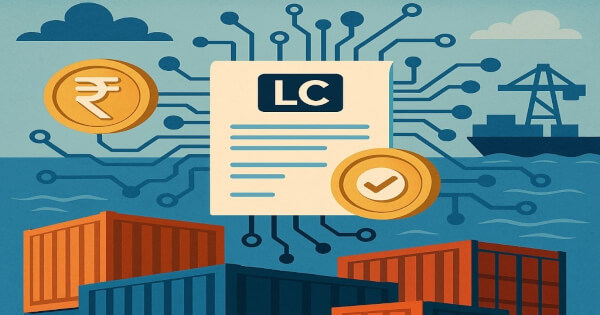
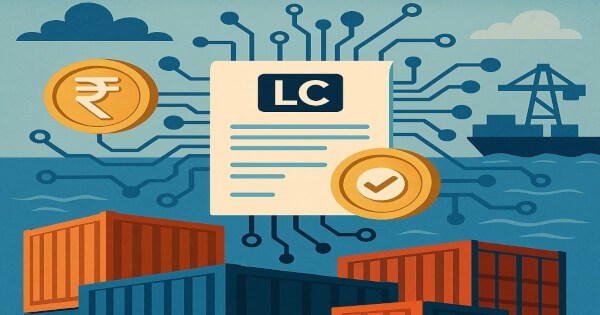
India faces a $300 billion export-credit hole, but blockchain’s “tokenised trade finance” could streamline processes, digitizing LCs and invoices to improve entry for small companies.


India’s exporters ship about US $770 billion in items and companies a yr, yet small and mid-size companies still battle to flip buy orders into financial institution credit score. The Asian Development Bank’s newest Trade Finance Gaps, Growth and Jobs survey pegs the world shortfall at US $2.5 trillion in 2022, up nearly 50 % from the pandemic low. Industry teams and IFC research put India’s share of that hole at roughly US $300 billion, concentrated in working-capital loans that never attain MSMEs. Blockchain builders say the treatment may be “tokenised trade finance”—digitising invoices, letters of credit score and collateral into on-chain belongings that traders anywhere can fund in actual time.

Why Letters of Credit Still Run on Paper

A typical textile exporter in Tiruppur ships material to a purchaser in Milan under a letter of credit score (LC). The LC passes through 4 banks, six paper paperwork and a guide checking loop that typically lasts 7–10 days. Any mismatch—an additional comma on a invoice of lading—can freeze fee. Banks therefore ration credit score to identified corporates and over-collateralise the relaxation, leaving smaller suppliers in limbo.

How Tokenisation Changes The Workflow

  • Document digitisation. Bills of lading, inspection experiences and warehouse receipts are hashed and timestamped on a permissioned ledger.
  • Smart-contract LC. Terms encoded in the contract self-execute: when the delivery line uploads IoT-verified arrival knowledge, fee triggers robotically.
  • Invoice tokens. The receivable becomes a fungible token that can be discounted or repo-financed by world liquidity swimming pools 24/7.
  • A blockchain document can not eradicate fraud, but it slashes the price and time of doc matching—banks can prolong credit score against real-time knowledge rather than days-old PDFs.

    Three Live Rails to Watch

  • Contour 2.0 – The once-faltering LC consortium discovered new life after Singapore-based Xalts acquired the platform in 2024. Indian banks including ICICI and Citi India have since run pilot on-chain LCs that reduce processing time from 5–7 days to under 24 hours.
  • SGTraDex – Singapore’s trade-data trade went stay in mid-2024 and now pipes digitised paperwork to DBS trade-finance desks; Indian exporters utilizing Singapore forwarders can decide in via a single API.
  • Project mBridge – A joint CBDC platform of the BIS Innovation Hub, Hong Kong, China, Thailand and the UAE. Its MVP, reached in 2024, settled pilot cross-border trades in seconds and flagged programmable commerce finance as a top-priority use case. RBI is an observer; participation would let rupee-settled LCs clear alongside dirham or yuan on the same ledger.
  • India’s Own Experiments

  • GIFT City sandbox. The International Financial Services Centres Authority (IFSCA) is reviewing tokenised-assets guidelines that would let fintechs challenge rupee or greenback LC tokens inside the SEZ. A public session closed in February 2025; remaining tips are promised this yr.
  • EXIM Bank digital LC pilot. Budget paperwork for FY 2025 point out a proof-of-concept to “tokenise export credit guarantees,” although no public outcomes are out yet. If adopted, the scheme would let banks rediscount EXIM-guaranteed tokens with world traders, releasing balance-sheet house for contemporary MSME loans.
  • What Could Go Right

  • Cost curves. Contour trials reduce financial institution processing charges by 50–70 %. At scale, these financial savings can be priced into decrease LC advisory prices for small exporters.
  • Risk sharing. Tokenised invoices can settle in swimming pools funded by insurers, hedge funds or growth banks. A new US $1 billion HSBC–IFC facility introduced in late 2024 explicitly targets digital trade-finance belongings in rising markets.
  • Data visibility. A shared ledger provides regulators immediate AML/KYC sightlines—no more searching through couriered paperwork when pink flags emerge.
  • What Could Stall Progress

  • Legal enforceability. India’s Negotiable Instruments Act still assumes a paper invoice of trade. Parliament must amend “possession” definitions before a purely digital LC is totally court-proof.
  • GST and stamp responsibility. Token transfers can set off a number of state-levy interpretations; readability is wanted to cease mid-chain friction.
  • On-chain liquidity. Today’s tokenised-LC pilots clear in the tens of hundreds of thousands, not billions. Without bigger secondary swimming pools, banks will maintain one foot in the outdated system.
  • A Playbook from Hong Kong and Singapore

    Both hubs deal with tokenised commerce belongings as uncertificated securities, clearing them through licensed “market operators.” That certainty let the Hong Kong Monetary Authority settle its 2023 tokenised inexperienced bond in T + 1, 5 occasions sooner than a vanilla world notice. If Mumbai and Delhi emulate that authorized plumbing, token swimming pools in Hong Kong or Dubai could seamlessly fund Gujarat-issued LC tokens—matching India’s exporters with international greenback liquidity at velocity.

    Outlook

    Tokenisation will not magic away India’s US $300 billion export-credit hole in a single day, but early pilots present it can shave days off settlement, unlock new investor bases and shrink compliance prices—the trio of frictions that lock MSMEs out of commerce finance. The next 12 months will be decisive: if GIFT City rolls out its rulebook and RBI joins mBridge trials, the first totally regulated, on-chain LC corridors could be stay by 2026. That would flip blockchain from convention jargon into a working capital machine—precisely where Indian exporters need assistance most.


    Image supply: Shutterstock

    [ad_2]

    BlockBuzzed
    BlockBuzzedhttps://blockbuzzed.com
    Bringing you the latest trends, insights, and updates from the world of blockchain and cryptocurrency, the BlockBuzzed team is passionate about making digital assets accessible and understandable for everyone. Whether breaking news, in-depth guides, or expert analysis, our authors strive to empower readers with timely and accurate information.

    Related articles

    Recent articles