

[ad_1]
ETF inflows and institutional purchases proceed to climb, yet many buyers are puzzled by the muted Bitcoin value motion. With billions flowing into BTC, why aren’t we seeing the value explode to new highs? The actuality is more nuanced than it first seems.
Bitcoin ETF Inflows
Looking at the ETF cumulative inflows chart (excluding GBTC outflows), it’s clear that demand from institutional gamers has been sturdy. Since the most latest pullback in late March, internet ETF inflows have climbed from roughly 527,000 BTC to over 630,000 BTC, an enhance of around 100,000 BTC in under 3 months. These are important numbers, yet the Bitcoin value has largely primarily drifted sideways since the begin of 2025.
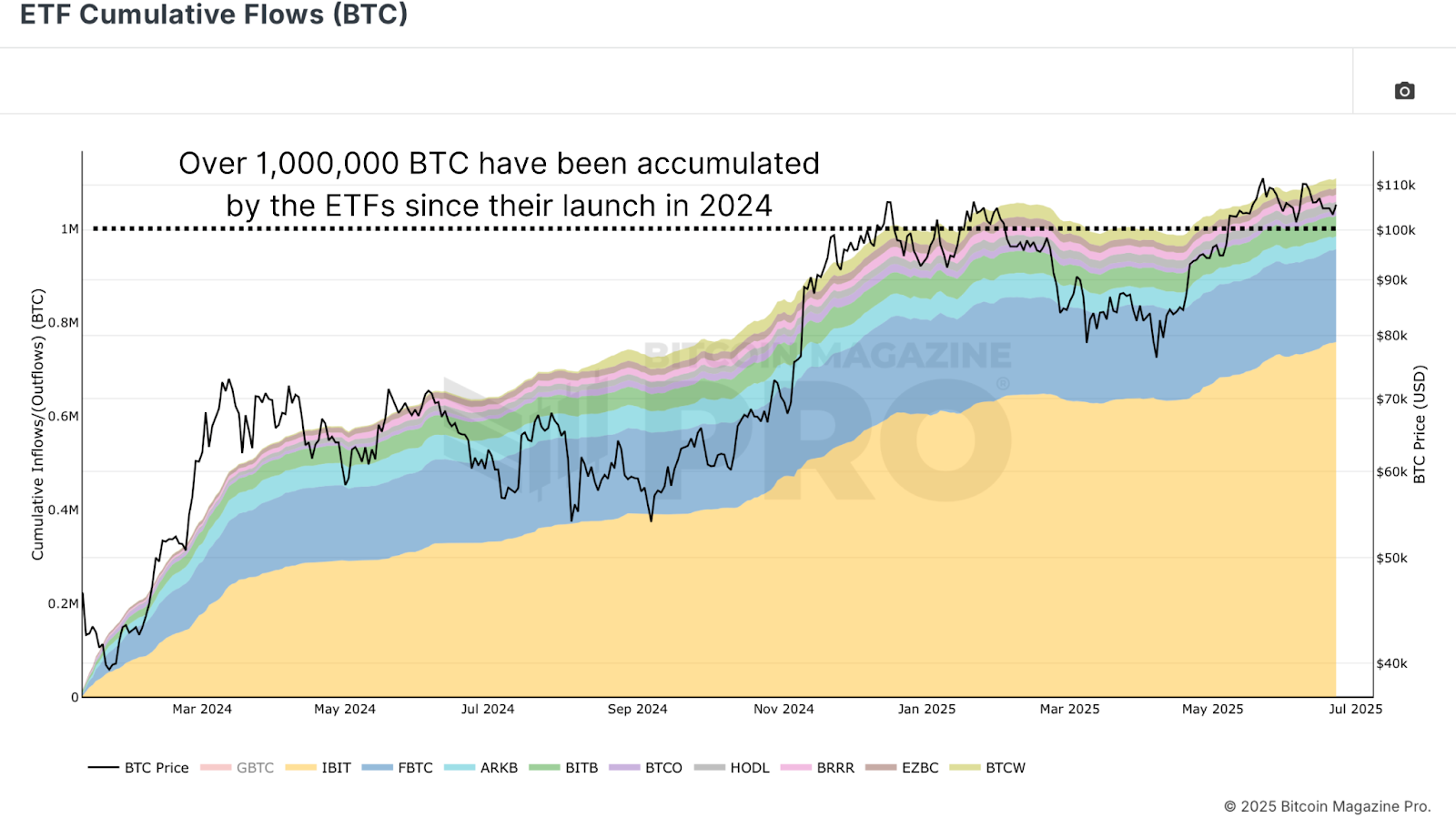
It’s vital to keep in mind that not all ETF flows symbolize “institutional” shopping for in the purest sense. Many ETF purchases come from shopper allocations, for instance, household workplaces or high-net-worth people utilizing platforms like BlackRock. Still, these flows matter, and the regular accumulation is a constructive driver for long-term provide and demand dynamics.
Bitcoin Treasury Buying
Complementing ETF inflows, company treasury shopping for has also been sturdy, with (Micro)Strategy main the cost. MSTR alone have seen their holdings have jumped from roughly 528,000 BTC to over 592,000 BTC in this 12 months alone. Across all treasury firms tracked, whole holdings now exceed 823,000 BTC, representing an astounding $86 billion in worth.
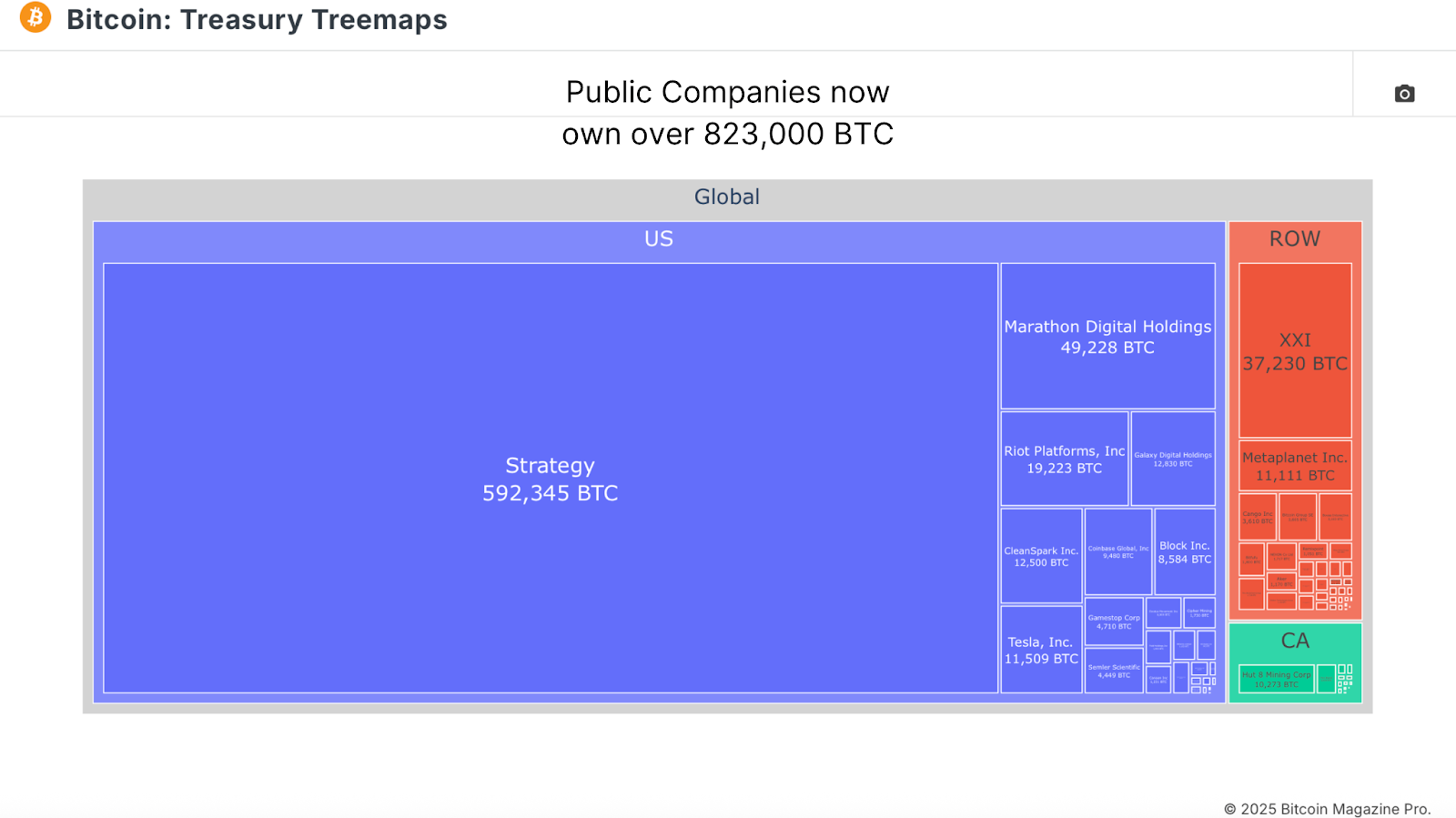
Despite this, many market contributors really feel underwhelmed by value motion in contrast to prior cycles. But we must contextualize expectations: the BTC market cap is now in the multi-trillion-dollar vary. The sheer scale of capital required to drive exponential strikes at present dwarfs earlier cycles. Comparing this cycle to the 10x returns of earlier eras isn’t practical. In reality, BTC has more than doubled from $40K at the time of ETF launch to latest ranges above $110K, a still monumental achievement for a maturing asset class.
Bitcoin Supply Overhang
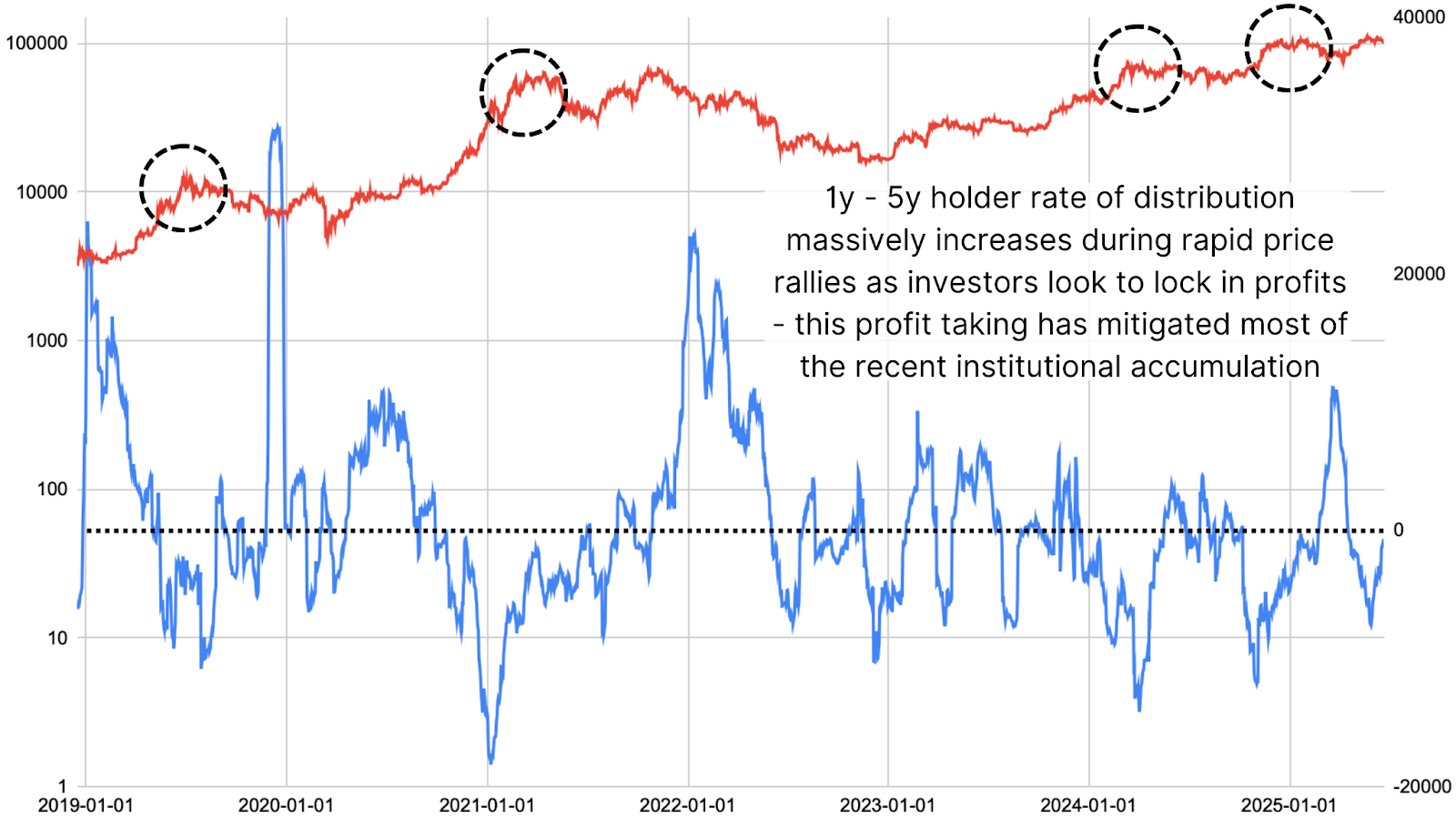
To perceive why Bitcoin costs haven’t surged even further, we must look at promoting conduct. By analyzing HODL Waves knowledge for 1-5 12 months bands, we can quantify long-term holder profit-taking. Over the previous three months, more than 240,000 BTC from these older bands has been distributed to the market, practically a quarter-million BTC in internet outflows.
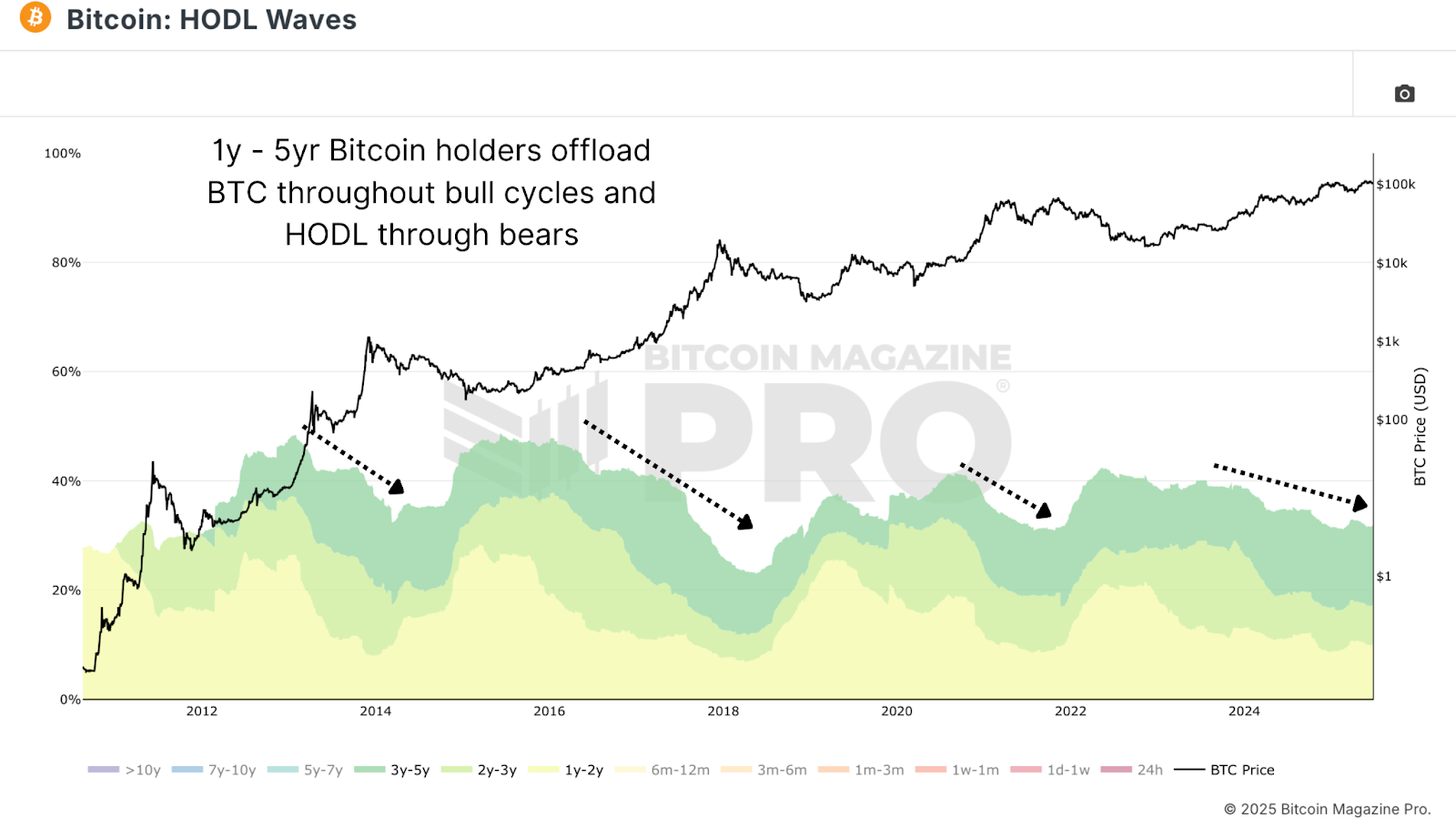
This promoting has largely counterbalanced institutional accumulation. Given that every day miner issuance still provides one other ~450 BTC to the market, we see why value has struggled to break larger: the market is in a state of supply-demand equilibrium.
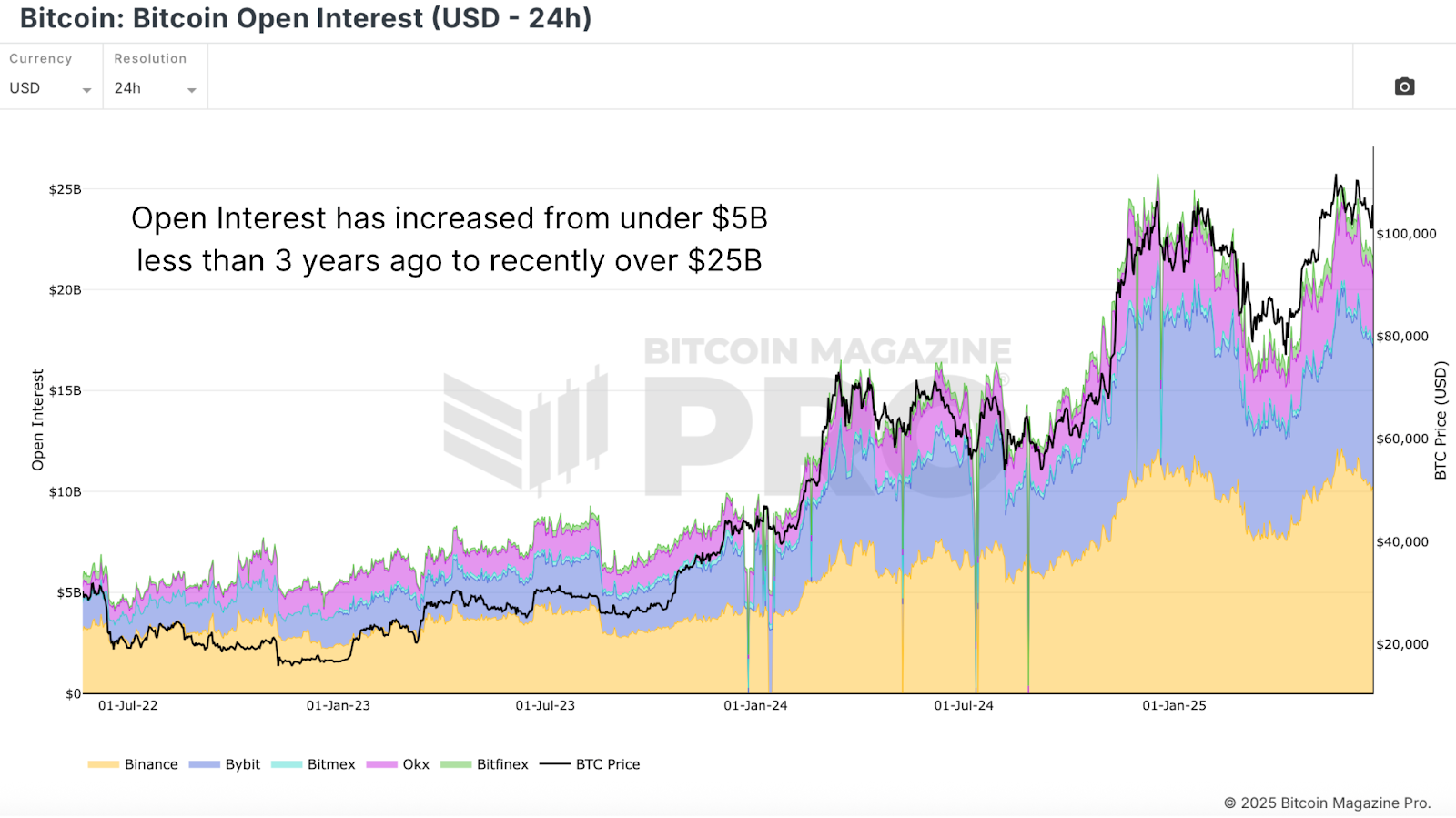
Meanwhile, open curiosity on BTC derivatives markets has exploded. From under $5B less than 3 years in the past to over $25B at present. Many new contributors desire are opting to commerce “paper BTC” on derivatives rather than shopping for spot BTC, which reduces the constructive affect on value of elevated market contributors.
Bitcoin Bullish Shifts
There is however now cause for optimism. Long-term holder promoting is now decelerating, with latest internet outflows falling under 1,000 BTC per day, a substantial discount from earlier month-to-month averages just weeks in the past. If institutional inflows stay regular and retail demand begins to awaken, even at ranges seen earlier this cycle rather than excessive prior peaks, we could simply see one other highly effective leg larger. Past cases present that when retail flows surge from these ranges, BTC can double in value within months.
Conclusion
ETF inflows and treasury purchases are pouring billions of {dollars} into Bitcoin, but the muted Bitcoin value response makes excellent sense when seen through the lens of provide and demand. Heavy profit-taking by long-term holders and rising derivatives hypothesis have balanced out the inflows.
As long-term promoting subsides and institutional shopping for continues, the stage is being set for the next bullish impulse. Whether we see the euphoric retail mania of prior cycles stays to be seen, but even modest retail inflows mixed with present institutional demand could drive costs sharply larger sooner rather than later.

