

Altcoin liquidity gaps are not a signal of strength, they are a signal of missing participation. When smaller coins move quickly, it is rarely because buyers are overwhelming the market, it is because there is not enough opposing liquidity to slow price down. These environments reward movement, not conviction, and the speed that attracts attention is often the same condition that makes the move structurally unstable.
Why Bitcoin Moves Differently From Altcoins
Bitcoin operates within a liquidity structure that forces negotiation. Its order books are deeper, spreads are tighter, and participation is distributed across both spot and derivatives markets. This creates a condition where price movement requires sustained interaction between buyers and sellers.
In stable conditions:
- Large orders are absorbed across multiple levels
- Liquidity providers remain active
- Price adjusts gradually rather than abruptly
This environment introduces friction. Every attempt to move price encounters opposing interest, which slows execution and forces participants to reveal intent over time.
Altcoins lack this resistance. Their movement is not faster because demand is stronger, it is faster because there is less standing in the way.
Markets don’t move because pressure builds, they move because resistance disappears.
What Liquidity Gaps Actually Represent
Liquidity gaps are not just empty spaces in the order book, they are areas where the market has chosen not to participate. These gaps form when neither buyers nor sellers are willing to commit capital at certain price levels, leaving discontinuities in liquidity.
When price enters these zones:
- There are fewer resting orders to absorb flow
- Execution becomes one-sided rather than negotiated
- Price moves in jumps instead of increments
This changes how price behaves. Instead of being shaped by continuous interaction, it becomes dependent on where liquidity exists and where it does not.
Recent sessions have shown that many altcoin moves do not develop through steady accumulation. Instead, price expands quickly once it enters low-liquidity zones, then slows or stalls as soon as it reaches areas where orders begin to cluster. What appears as momentum is often just price moving through areas that were never structurally defended.
Price doesn’t move because demand increases, it moves because there’s nothing left to absorb it.
Why Smaller Coins Don’t Need Strong Demand
In thin markets, demand is not the primary driver of movement. Structure is. Altcoins can move significantly without strong participation because the order book does not require much capital to displace price.
Because liquidity is limited:
- Smaller capital can shift price across multiple levels
- Larger participants can initiate movement without committing full size
- Early price movement attracts participation rather than being caused by it
Over the past week, several altcoins have shown sharp upward expansions followed by immediate consolidation, reflecting this exact sequence, movement first, participation later.
This reveals a key behavioral pattern. Initial moves are often exploratory. Larger participants push price into thin areas to test whether the market will follow, not because they are fully positioned.
This is where understanding how order book imbalance affects price movement becomes critical, because imbalance creates movement before conviction exists.
Price doesn’t move because buyers are aggressive, it moves because sellers are absent.
The Role of Market Makers in Thin Liquidity
In altcoins, market makers are not just facilitating trades, they are managing risk in an environment where liquidity is inconsistent. Unlike Bitcoin, where depth allows for smoother inventory management, altcoin markets expose market makers to higher execution risk.
When conditions are stable:
- Market makers maintain tighter spreads
- Liquidity appears continuous
- Price movement remains controlled
But when risk increases:
- Spreads widen rapidly
- Liquidity is pulled from vulnerable levels
- Order books become uneven and fragmented
Current market conditions suggest that liquidity providers in smaller altcoins are becoming more selective, with visible gaps appearing more frequently during periods of uncertainty.
Understanding how market makers control execution timing explains why these shifts feel abrupt. Liquidity is not gradually reduced, it is actively withdrawn when the cost of holding inventory increases relative to expected flow.
At an institutional level, larger participants often separate execution across venues. Positioning is frequently built in derivatives markets where liquidity is deeper and entry is less visible, while price movement is allowed to occur in thinner spot markets. This creates a disconnect where visible spot demand is not the cause of the move, but a reaction to positioning established elsewhere.
Why Altcoin Moves Often Reverse Quickly
Fast movement in altcoins rarely builds structural support. When price moves through liquidity gaps, it does so without creating layers of participation underneath.
This results in an unstable structure:
- There is minimal support below current price
- Participation is uneven across levels
- Reversals encounter the same lack of resistance as upward moves
Recent sessions have shown that altcoins tend to retrace quickly after sharp expansions, not because sentiment changes, but because the move itself lacked structural backing.
The market is not rejecting price, it is simply moving back through the same inefficient structure that allowed the move in the first place.
Altcoin Liquidity Gaps and Capital Rotation
Liquidity gaps play a direct role in how capital rotates across the market. When Bitcoin becomes harder to move due to its depth, participants shift toward environments where their capital has more impact.
Altcoins provide that environment:
- Less capital is required to move price
- Execution is less constrained by depth
- Timing becomes more important than size
Over the past week, periods of Bitcoin stability have coincided with increased activity in smaller altcoins, highlighting how capital seeks environments where movement is easier to generate.
This is not always a change in conviction, it is a change in efficiency.
Altcoins don’t rally because they attract more capital, they rally because they require less of it.
Understanding what drives altcoin rotation signals shows that these flows are often opportunistic, driven by structural conditions rather than broad market belief.
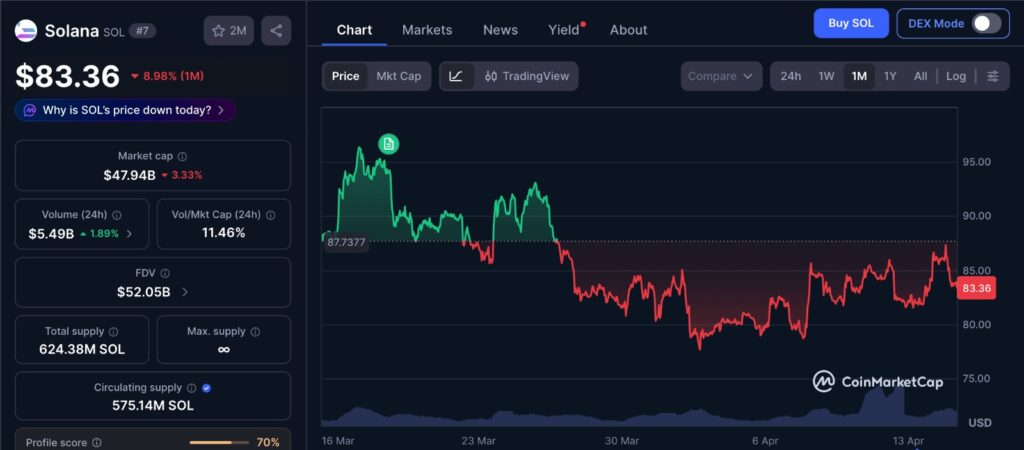
The 1-month chart reflects how altcoin price behavior tends to expand in short, aggressive bursts rather than sustained trends. Rapid upward moves are often followed by equally fast retracements, highlighting the lack of structural support beneath price. Over recent sessions, similar patterns have appeared where expansion occurs quickly once liquidity thins, then stabilizes only when price reaches areas with deeper participation. This reinforces a consistent mechanism: price is not reacting to demand, it is responding to where liquidity is missing.
Editor’s View: Why Speed Can Be Misleading
Speed in altcoin markets creates the illusion of strength because it compresses time and amplifies visibility. But what appears decisive is often just unopposed movement. When price travels quickly, it is usually encountering less friction, not more conviction. The deeper signal is not how fast price moves, but how much interaction it required to get there. In many cases, the fastest moves reveal the least about true market intent, because they occur in conditions where the market is least engaged.
Conclusion
Altcoin liquidity gaps do not just explain why price moves faster, they explain how markets behave when structure is incomplete. Movement in these environments is driven less by demand and more by the absence of resistance, creating conditions where price can travel quickly but without stability. Recognizing this shifts the focus from chasing speed to understanding the underlying structure that made it possible.
Suggested Links
Keep yourself updated with the latest news around Altcoins with Blockbuzzed
Keep yourself updated with the latest news around Ethereum with Blockbuzzed

